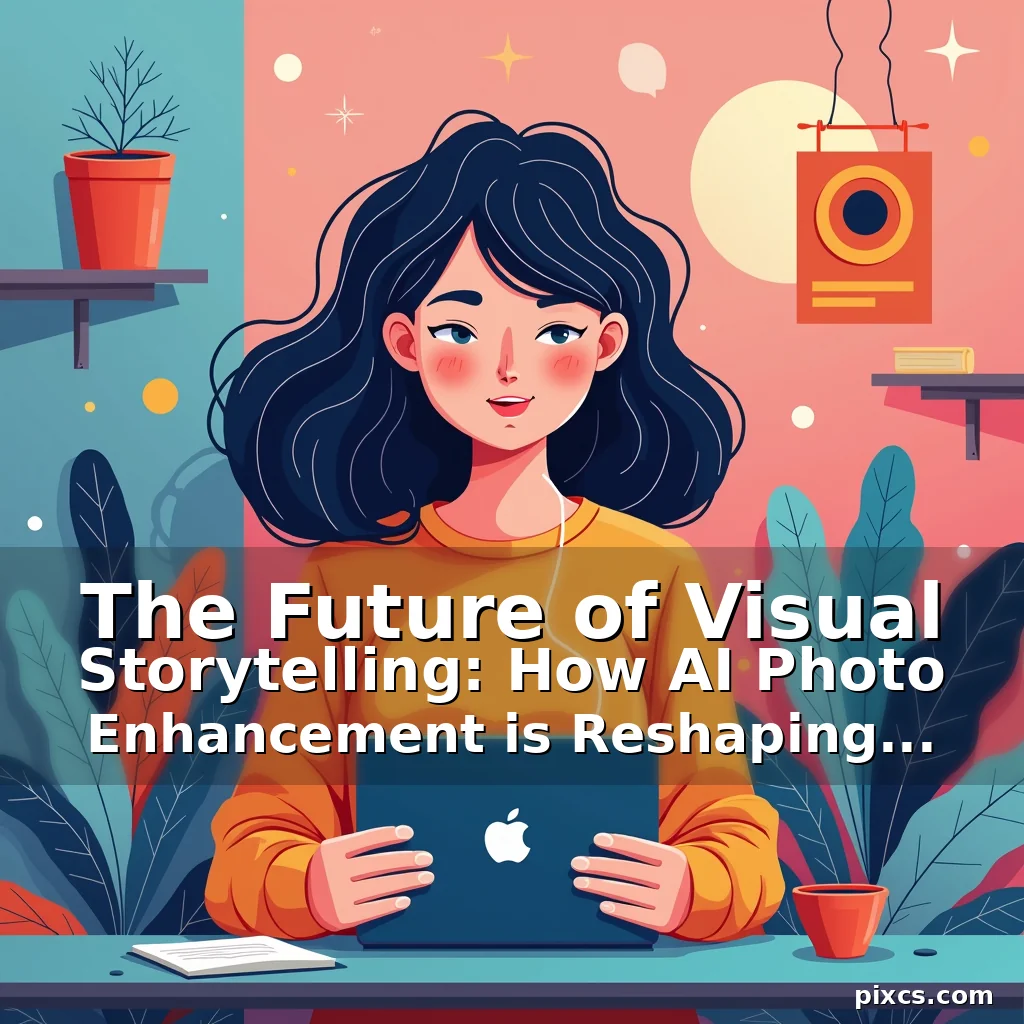
The Future of Visual Storytelling: How AI Photo Enhancement is Reshaping Photography
In an era where visual storytelling reigns supreme, AI-powered photo enhancement has emerged as a revolutionary force within the photography world. This cutting-edge technology transforms ordinary images into stunning visuals by leveraging machine learning algorithms that analyze millions of photographs to identify patterns and optimize image quality.
Pixcs members are at the forefront of this digital revolution, embracing tools that allow them to elevate their photographic output without requiring extensive post-processing skills. As we explore the intricacies of AI photo enhancement, you’ll discover how these innovations are redefining what’s possible in both amateur and professional photography.
Understanding the Core Principles of AI Photo Enhancement
At its heart, AI photo enhancement operates through deep learning models trained on vast datasets containing billions of images. These neural networks learn from each pixel, recognizing textures, colors, and lighting conditions that define high-quality photography. By understanding these elements, AI can intelligently adjust parameters such as expo
Modern AI systems go beyond basic adjustments by employing advanced techniques like super-resolution upscaling and noise reduction. For instance, when enhancing low-light photos, these algorithms don’t merely brighten the image but also restore lost details while minimizing artificial artifacts that might otherwise appear during processing.
- Super-resolution upscaling: Increases resolution without sacrificing image clarity, allowing photographers to zoom in on fine details without losing quality
- Noise reduction: Eliminates grainy effects caused by low light or long exposures while preserving essential texture information
These capabilities enable users to achieve results previously reserved for professional studios using expensive equipment. With AI-driven enhancements becoming increasingly accessible, even casual photographers can now produce magazine-worthy shots straight out of their smartphones.
The Evolution of Image Processing Technologies
Photography has undergone significant transformations since the invention of film cameras in the mid-19th century. The transition from chemical-based development to digital imaging marked a turning point, paving the way for sophisticated software solutions that continue to evolve rapidly today. AI photo enhancement represents the next logical step in this progression.
Early digital editing programs relied heavily on manual input from users who had to understand complex color theory and composition principles before making any changes. In contrast, modern AI tools automate many of these processes by analyzing images independently and applying optimal corrections based on learned data sets.
This shift has democratized access to high-quality photo editing, enabling individuals without formal training to create visually compelling content effortlessly. Whether restoring old family portraits or improving travel snapshots, AI-enhanced images have become ubiquitous across social media platforms and online portfolios alike.
How AI Algorithms Analyze and Enhance Images
Behind every impressive AI-enhanced photograph lies a powerful algorithm capable of performing intricate calculations in milliseconds. These intelligent systems utilize convolutional neural networks (CNNs), which excel at identifying spatial hierarchies within images—ranging from simple edges to complex objects and scenes.
When processing an image, AI first decomposes it into individual components such as brightness levels, color gradients, and depth perception. It then compares these attributes against massive databases of professionally edited photographs to determine appropriate modifications. This comparison allows the system to make informed decisions about which aspects need improvement while maintaining natural aesthetics.
To ensure accurate enhancements, some advanced AI tools incorporate generative adversarial networks (GANs). These dual-network structures work together—one generating potential edits while another evaluates their realism—to produce results indistinguishable from authentic photographs.
Such technological advancements mean that even novice photographers can achieve professional-grade results without needing years of experience or costly software subscriptions. The integration of AI into everyday photography applications continues to blur the lines between amateur and expert-level outputs.
Applications Across Different Photography Genres
From portrait photography to landscape captures, AI photo enhancement finds utility across diverse genres. Portrait specialists benefit greatly from features like skin smoothing and blemish removal, while nature photographers appreciate automatic horizon alignment and cloud enhancement capabilities.
Landscape enthusiasts often struggle with capturing perfect skies due to changing weather conditions. Fortunately, AI tools now offer sky replacement options that seamlessly blend realistic backgrounds with foreground elements. This feature enables photographers to transform dull overcast days into vibrant sunlit landscapes with minimal effort.
Street photography presents unique challenges regarding motion capture and ambient lighting variations. However, recent developments in AI have introduced dynamic sharpening techniques that enhance moving subjects’ clarity without creating unwanted blurring artifacts—a game-changer for urban explorers documenting fast-paced environments.
In commercial settings, product photographers leverage AI enhancements to create consistent branding materials. Features like background removal and object isolation streamline workflows significantly, ensuring uniform presentation across advertising campaigns and e-commerce listings.
Evaluating the Limitations and Ethical Considerations
While AI photo enhancement offers numerous benefits, it also raises ethical concerns worth considering. One primary issue revolves around authenticity—when does enhanced imagery cross the line into manipulation? Photographers must be transparent about alterations made to maintain trust with audiences consuming visual content.
Over-reliance on automated enhancements may lead to homogenization in visual styles, potentially diminishing artistic expression. Some critics argue that excessive use of AI could erode traditional photography skills, reducing the value placed on hands-on craftsmanship traditionally associated with the medium.
Privacy considerations also come into play when utilizing AI tools involving facial recognition technologies. Users should exercise caution regarding which platforms they choose for processing sensitive personal images to avoid unintended data exposure risks.
Despite these limitations, responsible usage combined with ongoing education ensures that AI remains a beneficial tool rather than a crutch. Understanding both technical capabilities and ethical implications empowers photographers to wield this technology wisely.
Choosing the Right AI Tools for Your Needs
Selecting an appropriate AI photo enhancement platform depends largely on your specific requirements and workflow preferences. Several factors influence this decision—including budget constraints, desired level of control, compatibility with existing software ecosystems, and ease-of-use metrics.
For casual users seeking quick fixes, mobile apps provide convenient solutions with intuitive interfaces designed for simplicity. Popular choices include Adobe Lightroom Mobile and Snapseed, which integrate AI features alongside conventional editing functions for versatile customization options.
Professional photographers working on larger projects might prefer desktop applications offering greater flexibility and precision controls. Software suites like Capture One Pro and DxO PureRAW cater specifically to those prioritizing high-end performance standards while integrating robust AI capabilities.
Cloud-based services represent another viable option for collaborative teams managing shared galleries or client projects remotely. Platforms such as Canva and Fotor facilitate real-time collaboration features along with built-in AI enhancements suitable for marketing professionals producing campaign assets efficiently.
Integrating AI Into Existing Workflows
Successfully incorporating AI photo enhancement requires thoughtful consideration of how these tools align with current creative practices. Many photographers find that combining manual techniques with AI-assisted adjustments yields superior outcomes compared to relying solely on either method.
Beginners unfamiliar with traditional darkroom methods might start by experimenting with auto-enhancement presets available in most contemporary camera phones. Gradually transitioning towards more customized approaches builds confidence while refining aesthetic sensibilities over time.
Intermediate practitioners benefit from mastering layer masking strategies used in conjunction with AI-generated masks created automatically by smart selection algorithms. This hybrid approach maintains creative autonomy while streamlining tedious tasks typically associated with compositing layered images.
Advanced users exploring experimental formats such as HDR blending or panoramic stitching gain advantages through AI’s ability to predict optimal exposure bracketing sequences automatically. Such predictive analytics reduce guesswork involved in multi-exposure setups commonly utilized in architectural photography scenarios.
The Impact on Professional Photography Industries
The adoption rate among industry professionals varies widely depending upon specialization areas within photography sectors. Commercial shooters frequently embrace AI tools given their efficiency gains realized through batch processing capabilities inherent in enterprise-level implementations.
Portrait studios report increased customer satisfaction stemming from faster turnaround times enabled via automated retouching pipelines integrated within studio management systems. Clients appreciate receiving polished final products sooner after sessions without compromising quality expectations set by industry benchmarks.
In documentary photography circles, purists remain cautious about widespread implementation despite acknowledging occasional usefulness provided by selective application of AI filters limited strictly to environmental correction purposes only rather than stylistic alterations affecting subject representation integrity.
Rising trends indicate growing acceptance toward AI-assisted methodologies especially amongst younger generations entering profession who’ve grown up immersed in digitally augmented realities shaping contemporary visual culture norms surrounding acceptable degrees of image modification permissible within mainstream media consumption contexts.
Future Innovations and Emerging Trends
Ongoing research efforts suggest exciting possibilities emerging from intersections between computer vision science and photorealistic rendering disciplines aimed at pushing boundaries further still. Current experiments involve developing real-time AI augmentation modules embedded directly inside camera sensors themselves eliminating reliance upon external computing resources altogether.
Advancements in quantum machine learning promise exponential improvements in pattern recognition accuracy rates achievable through parallel processing architectures fundamentally different from classical computational paradigms currently governing present-day AI implementations.
Emerging fields focused on multimodal fusion techniques combine auditory cues with visual stimuli analysis opening doors toward immersive experiences where audiovisual synchronization enhances narrative impact achieved purely through static frames alone previously unimaginable without cinematic production budgets.
As these transformative technologies mature commercially, expect continued evolution reshaping entire industries reliant upon visual communication—from virtual reality design spaces requiring hyper-realistic asset generation down to medical diagnostics benefiting immensely from AI-augmented radiographic interpretations aiding early disease detection phases crucially impacting patient prognoses positively.
Conclusion
The rise of AI photo enhancement marks a pivotal moment in photographic history, merging artistry with computational intelligence to unlock unprecedented creative possibilities. From empowering hobbyists to elevating professional standards, this technology continues to redefine what’s achievable through lens-based storytelling mediums.
By staying informed about evolving best practices regarding ethical utilization alongside continuous skill refinement exercises focusing equally upon cultivating human intuition alongside augmenting mechanical capabilities offered by intelligent systems, photographers position themselves advantageously amidst rapid technological change trajectories defining future directions within visual arts domains globally.