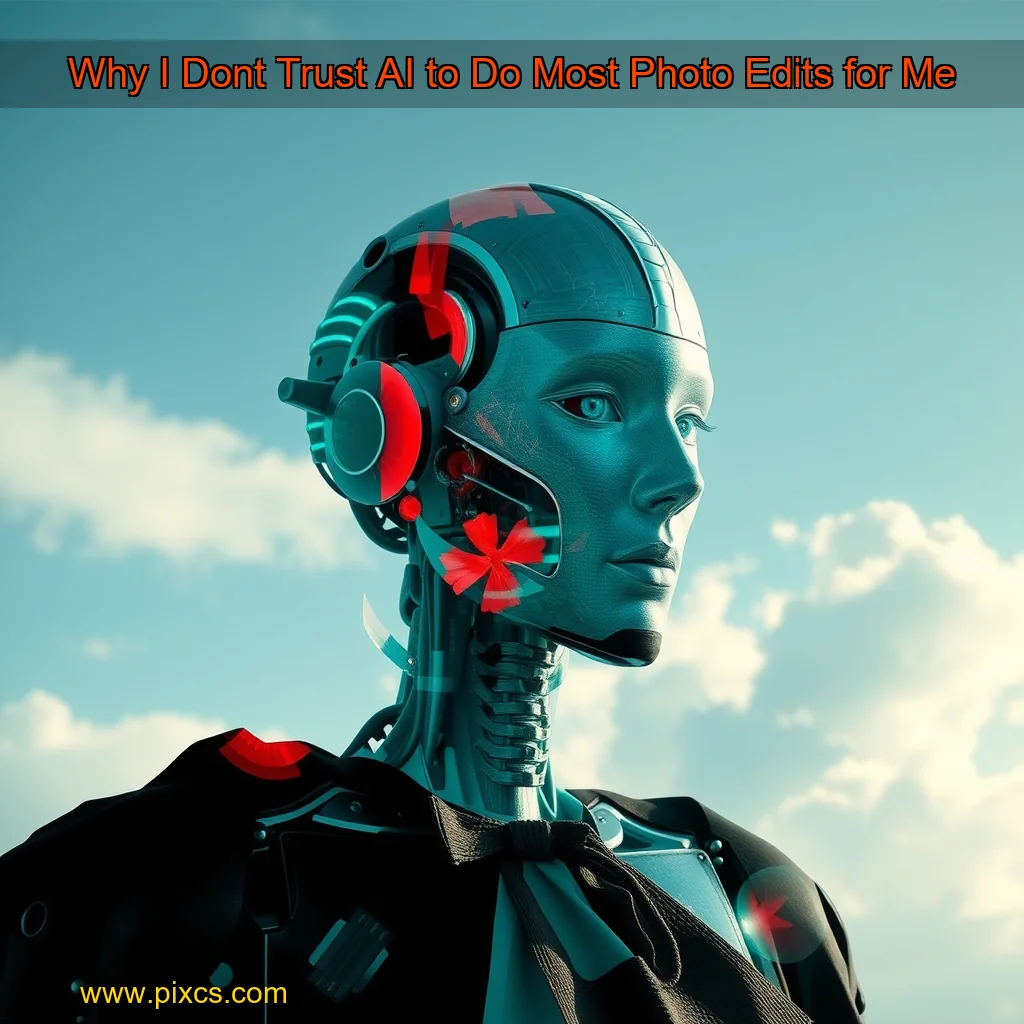
While AI can certainly help with tasks like automatic color correction, noise reduction, and object removal, it’s not a replacement for human creativity and judgment.
The Limitations of AI in Photo Editing
AI is not a magic wand that can instantly fix all photo editing issues. While it can perform tasks like automatic color correction, noise reduction, and object removal, it often struggles with more complex tasks that require human creativity and judgment. Lack of Contextual Understanding: AI photo editing tools often lack the contextual understanding of the image, which can lead to over-correction or incorrect adjustments.
The Importance of Human Touch in Photography
The Limitations of Technology
When it comes to photography, technology has made tremendous progress in recent years. With the advent of smartphone cameras, one-click photo editors, and social media platforms, it’s easier than ever to capture and share images. However, relying too heavily on technology can stifle creativity and lead to a homogenization of styles. The problem with one-click photo editors is that they often rely on algorithms to make decisions, rather than human intuition. These algorithms can produce results that are technically proficient, but lack the emotional depth and nuance that a human photographer brings to the table.*
The Value of Human Intuition
Human intuition plays a crucial role in photography. It’s the ability to see the world in a unique way, to notice details that others might miss, and to capture the essence of a moment. When a photographer relies too heavily on technology, they can miss out on the subtleties of human intuition. For example, a photographer might use a one-click photo editor to enhance the colors in an image, but miss the opportunity to capture the subtle play of light on the subject’s face.
The Dark Side of Generative AI
Generative AI has the power to create realistic images, videos, and audio that can be used for a variety of purposes, including advertising, entertainment, and even art. However, this power also raises significant concerns about data privacy and the potential misuse of personal images. Data Collection and Storage: Generative AI models require vast amounts of data to learn and improve. This data is often collected from publicly available sources, such as social media platforms, online images, and even surveillance footage. The question is, who owns this data, and how is it being used?
I also use a camera with a built-in white balance feature, which allows me to fine-tune the settings to my liking. I prefer to use a camera with a manual white balance setting, as it gives me more control over the final result.
Understanding the Challenges of White Balance in AI-Generated Images
White balance is a critical aspect of photography that can greatly impact the overall aesthetic and accuracy of an image. However, when using AI-generated images, the challenge of achieving accurate white balance can be particularly daunting. AI algorithms can struggle to accurately capture the nuances of light and color, leading to inconsistent and often inaccurate results.
Joyless Editing: How AI-Generated Photo Editing is Losing the Art of Human Touch.
The Joyless World of AI-Generated Photo Editing
In the age of AI, photo editing has become increasingly reliant on machine learning algorithms. While AI has revolutionized the way we edit images, it has also led to a sense of monotony and joylessness in the editing process.
The Rise of AI-Generated Photo Editing
AI-generated photo editing has become a staple in the digital photography world. With the rise of smartphone cameras and social media platforms, the demand for high-quality images has skyrocketed. To meet this demand, AI-powered photo editing tools have emerged, offering users a range of features and effects to enhance their images. Key features of AI-generated photo editing tools include: + Automatic image correction + Object removal and replacement + Color grading and adjustment + AI-powered filters and effects
The Problem with Overreliance on AI
While AI-generated photo editing tools can be incredibly useful, overreliance on them can lead to a sense of monotony and joylessness in the editing process. When we rely too heavily on AI, we lose the creative control and nuance that comes with manual editing.
I would want to tweak the colors to make them more vibrant and appealing to my eyes. I can imagine a future where AI can edit colors, but I’m not sure if that’s something that will happen anytime soon.
The Challenges of AI Color Editing
AI has made tremendous progress in various fields, including image editing. However, when it comes to color editing, AI still faces significant challenges. One of the primary issues is the complexity of human perception. Colors are not just a matter of light and dark, but also of hue, saturation, and context. AI algorithms struggle to fully understand and replicate these nuances. Limited contextual understanding: AI models often lack the contextual understanding that humans take for granted. For example, a bright blue sky might look different in a landscape versus a portrait. Inconsistent color representation: Different devices and screens can display colors differently, making it difficult for AI to accurately represent colors.
But for now, I’m sticking with my manual approach.
The Rise of AI-Powered Image Editing
In recent years, the world of image editing has undergone a significant transformation with the advent of AI-powered tools. These tools have been designed to assist photographers in editing their images, making the process faster, more efficient, and more accurate.
I want my photos to be more than just a technical exercise. I want my photography to be a reflection of my personality and style.
The Importance of Authenticity in Photography
Authenticity is a crucial aspect of photography that often gets overlooked.
Human intuition and AI can complement each other to create more interesting and varied images.
I’ve found that a more nuanced approach, incorporating both human intuition and AI-driven suggestions, can lead to more interesting and varied images.
The Benefits of Human Intuition in Photo Editing
While AI has made significant strides in photo editing, there are still many benefits to incorporating human intuition into the process. Here are some key advantages of using human intuition in photo editing:
The Limitations of AI in Photo Editing
While AI has many benefits in photo editing, there are also some limitations to consider:
Balancing Human Intuition and AI
To get the best of both worlds, photographers need to strike a balance between human intuition and AI-driven suggestions. Here are some tips for achieving this balance:

news is a contributor at Pixcs. We are committed to providing well-researched, accurate, and valuable content to our readers.