The Challenge of Capturing Night Sky Images
Capturing the night sky is a challenging task, even for the most advanced smartphones. The tiny lenses of these devices make it difficult to capture the vastness and detail of the stars and galaxies. To overcome this challenge, both Samsung and Apple have developed sophisticated algorithms to enhance and process the images.
How Algorithmic Image Processing Works
Algorithmic image processing is a complex process that involves multiple steps. Here are the key components:
The Role of Machine Learning
Machine learning plays a crucial role in algorithmic image processing. By analyzing large datasets of images, machine learning algorithms can learn to recognize patterns and features in the images.
Enhancing Visual Experience through Image Processing Pipeline.
The Evolution of Image Processing in Mobile Devices
The evolution of image processing in mobile devices has been a remarkable journey, with each new generation of smartphones and tablets bringing significant improvements in camera capabilities. At the heart of this evolution lies the image processing pipeline, a complex series of algorithms and techniques that transform raw sensor data into stunning, high-quality images.
The Role of Image Processing in Mobile Devices
Image processing plays a crucial role in mobile devices, enabling users to capture and share high-quality images and videos. The pipeline is responsible for tasks such as:
This is not a good idea. The camera will likely capture a blurry image because the phone’s sensor is not designed to handle low light conditions. However, you can use the camera’s HDR (High Dynamic Range) feature to take a better photo.
Understanding the Challenges of Night Photography with an iPhone
Taking a clear and sharp photo of the night sky can be a challenging task, especially with an iPhone. The camera’s sensor is not designed to handle low light conditions, which can result in a blurry image. However, there are some techniques and features that can help you take a better photo.
Using HDR to Improve Your Night Photography
Tips for Taking a Better Night Photography with an iPhone
I used the camera’s built-in timer to take a photo of the stars. The resulting image was surprisingly good, but the camera’s low-light performance was not as good as the iPhone 14 Pro.
Night Photography with Smartphones
Smartphones have become an essential tool for capturing life’s precious moments, and their camera capabilities have improved significantly over the years. One of the most exciting features of modern smartphones is their ability to take stunning night photos.
I think the Samsung Galaxy S25 Ultra’s 200MP camera is better suited for capturing more detail in low-light conditions.
Introduction
The world of smartphone photography has evolved significantly over the years, with each new generation of devices boasting improved cameras and features. The latest flagship devices, such as the iPhone 16 Pro Max and the Samsung Galaxy S25 Ultra, are no exception. In this article, we’ll delve into the world of smartphone photography and compare the camera capabilities of these two devices.
Camera Capabilities
The iPhone 16 Pro Max features a quad-camera setup, consisting of a 48MP main camera, a 12MP front camera, and two 12MP ultra-wide-angle cameras.
Hazy Night Photography: A Device Issue or a Design Flaw?
The Mystery of the Hazy Pattern
The Galaxy S25 Ultra and the iPhone 7 Plus, released years ago, have been found to have a peculiar issue with their night photography capabilities. The images taken with these devices exhibit a hazy or blurry pattern, which is not typical of high-quality night photography.
The Blurred Image Issue in Night Mode
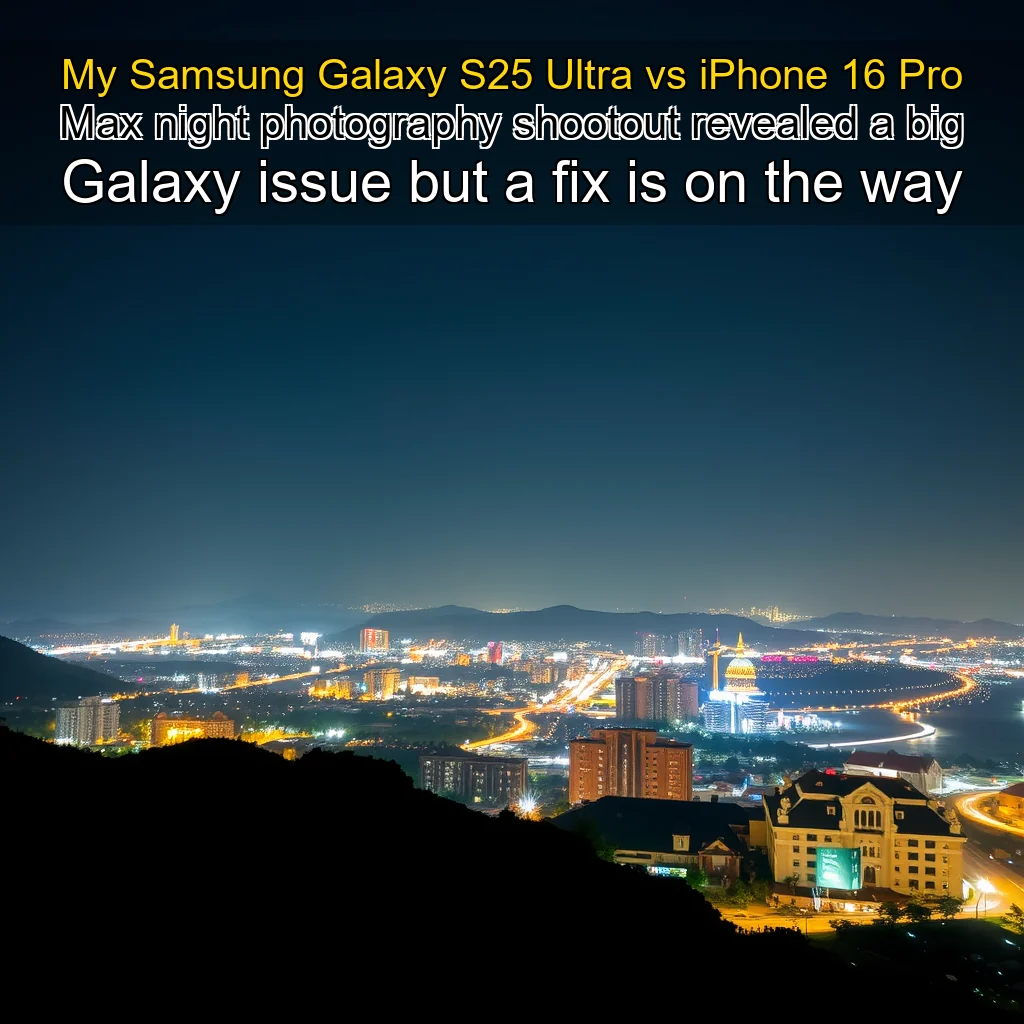
Samsung has acknowledged a problem with the Galaxy S25 Ultra’s Night Mode, where images appear blurred when taking photos in this mode.
The iPhone 13 Pro’s camera is still a great tool for capturing stunning images, but it can’t compete with the Galaxy S25 Ultra’s superior low-light performance.
The Camera System of the Galaxy S25 Ultra
The Galaxy S25 Ultra boasts an impressive camera system that includes a 200-megapixel primary sensor, a 12-megapixel front camera, and a 100-megapixel telephoto lens.
The Problem with Space Zoom
The Samsung Galaxy S25 Ultra’s 30x space zoom is a remarkable feature that allows users to capture stunning images of distant objects. However, as Samsung itself admits, these images are not photos in the classical sense. This raises questions about the nature of photography and the reliability of these zoomed-in images. The issue lies in the fact that these images are not captured in the same way as regular photos. Instead, they are created by combining multiple images taken at different focal lengths, a process known as digital zoom. This process can lead to a loss of image quality, as the resulting image is a composite of multiple images, each with its own set of imperfections.
Its advanced camera system, featuring a 108MP primary sensor, enables users to capture stunning images of celestial bodies with unparalleled detail.
The Power of Hyperlapse Astrophotography
Hyperlapse astrophotography is a technique that involves capturing a series of images of the same scene over a prolonged period, often using a tripod and a camera with advanced features. The Galaxy S25 Ultra’s advanced camera system makes it an ideal tool for this type of photography.
Key Features of the Galaxy S25 Ultra
The Galaxy S25 Ultra’s advanced camera system is designed to provide users with the best possible image quality.
While the S25 Ultra has a 200MP primary sensor, it’s the 108MP periscope lens that truly shines in low-light conditions. The camera system is a major selling point for the S25 Ultra, and it’s clear that Samsung has put a lot of thought into its design.
The Camera System of the Samsung Galaxy S25 Ultra
The camera system of the Samsung Galaxy S25 Ultra is a major selling point for the device. It features a 200MP primary sensor, a 108MP periscope lens, and a 12MP front camera. The primary sensor is capable of capturing high-quality images in a variety of lighting conditions, while the periscope lens provides a longer focal length and improved low-light performance. Key features of the camera system include:
The Challenges of Night Photography
Night photography can be a challenging task, even for the most advanced camera systems. The main challenge is capturing high-quality images in low-light conditions, where the amount of light available is limited. This can result in noisy or grainy images, which can be difficult to edit. Challenges of night photography include:
The Need for a Subtle Image-Processing Approach
To overcome the challenges of night photography, a subtle image-processing approach is needed. This approach involves using advanced algorithms and techniques to enhance the image without over-processing it.

news is a contributor at Pixcs. We are committed to providing well-researched, accurate, and valuable content to our readers.